
The story behind Smarty's upside-down banners at BYU


Have you ever walked past those upside-down Smarty™ banners at BYU and wondered, "What's going on here? Did someone make a mistake? Is somebody getting fired?"
We know it really shook some people up.
Smarty™ isn't a company that stays inside the most standard lines when it comes to advertising. From hiring the wrong Tom Cruise for our video ads, to posting ads in magazines with the tagline "don't scan this QR code," we've never really fit the standard mold.
And the upside-down banners at Brigham Young University are yet another one of those moments. If you're wondering why they're upside-down, this blog is for you.
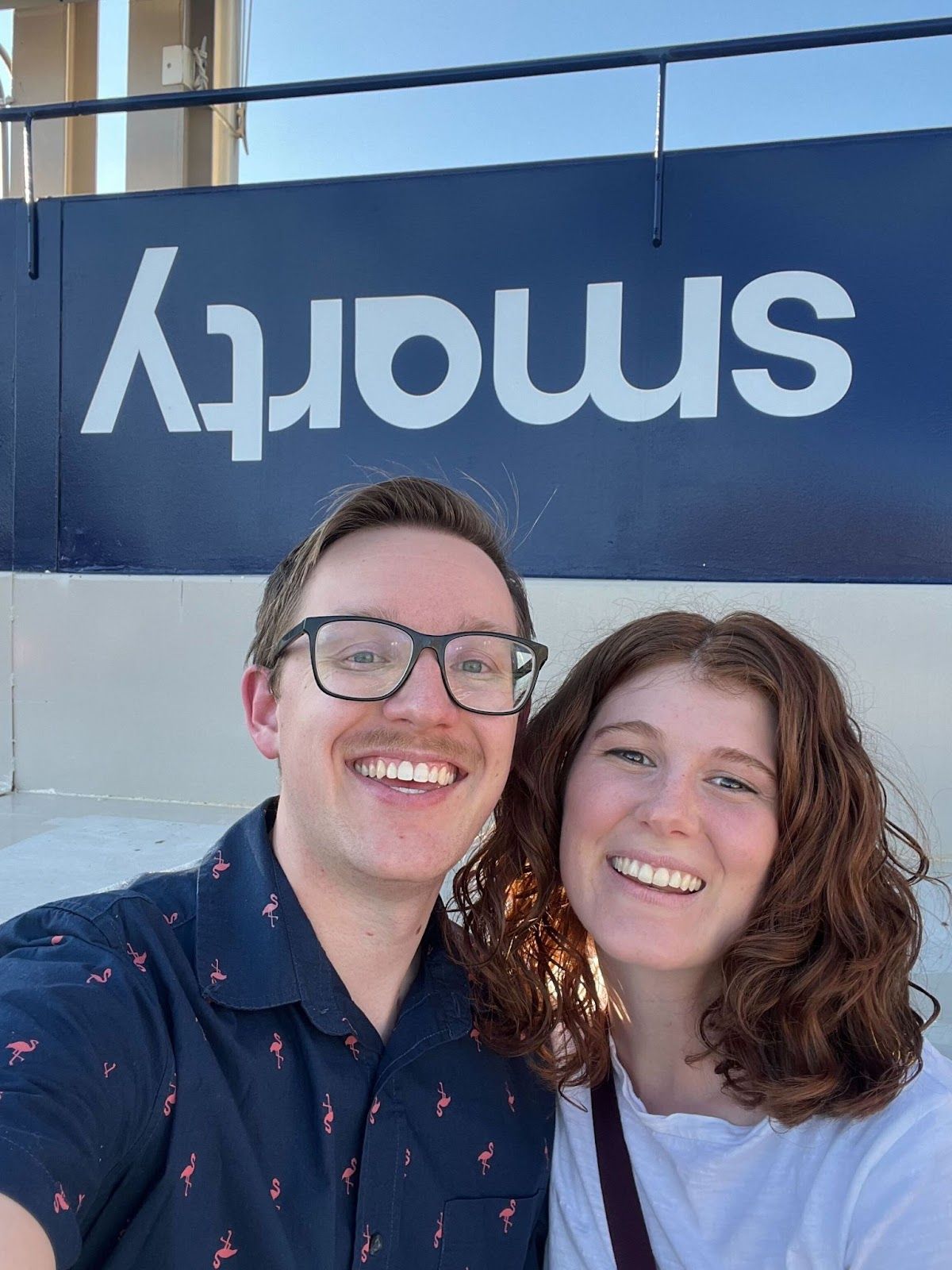
The core value of fun
We have three core values. Only three. One of them is "fun". That means ⅓ of our core is fun.
We've found that a large part of that fun is learning to not take things too seriously, including when our logo isn’t hung right-side-up.
We do other fun things too, like go on trips to Disneyland, cruises together, eating together a lot, and other activities. So why shouldn't that melt into our work?
We feel that upside-down banners offer a playful twist that embodies our company culture.
The buzz factor
As mentioned above, having a banner in such a public place that seems to be in error has generated a surprising amount of buzz. Our eyes tend to be drawn to things we perceive as broken, wrong, or out of the ordinary. The internet has enflamed that tendency in all of us, and it really helps draw the eye of onlookers who take a moment to look up from the football game.
There have been conversations on Twitter, LinkedIn, and even in real-world settings revolving around Smarty's banner "mixup." One person even suggested that whoever put the sign up would likely lose their job. Apparently, this resonates with people one way or another.
The value we've found in this buzz has been tremendous, and we'll get into more about that in a moment.
The QR code: A flashback
When we first started flying the Smarty banner at BYU it had a QR code that linked here.
That got a lot of buzz too.
Finding the right content to link to when doing real-world brand ads can be difficult. As Utah-based billboard company Blip says, outdoor advertising is for building name recognition. People will google your company name and are unlikely to scan a QR code or remember a website.
Of course, that didn't stop us from having the QR code. But people most likely googled the company name.
And for those who scanned it… we're sorry. Kind of.
The BYU connection: More than just banners
There are a few facts that connects Smarty to BYU.
- Our CEO, Jonathan Oliver is an alumnus.
- In 2021, he offered an NIL deal to all female athletes at the university.
- He has continued to offer other programs and donations to the school.
- We have had software development internships offered to many students from the university.
- Smarty is located in Provo, meaning that BYU and those interested in/associated with the school are our neighbors and friends.
- Smarty consists of 100% in-office employees, meaning that advertising for local talent at BYU for students and alumni is valuable.
Several current team members learned about Smarty thanks to those inverted banners, including folks in our IT department, HR department, and software development.
The future of the upside-down banners
So, will the upside-down banners go away? Probably, but not anytime soon.
Smarty is moving our HQ to a new office in Orem in 2024 near Utah Valley University. The building is currently under construction, and on the banners around the building, you'll find signs with the inverted logo.
Interested in working at Smarty? Check out our open positions.
Hopefully, that answered your questions, cleared up some confusion, and helped you understand why the Smarty banners are upside-down at Brigham Young University.